
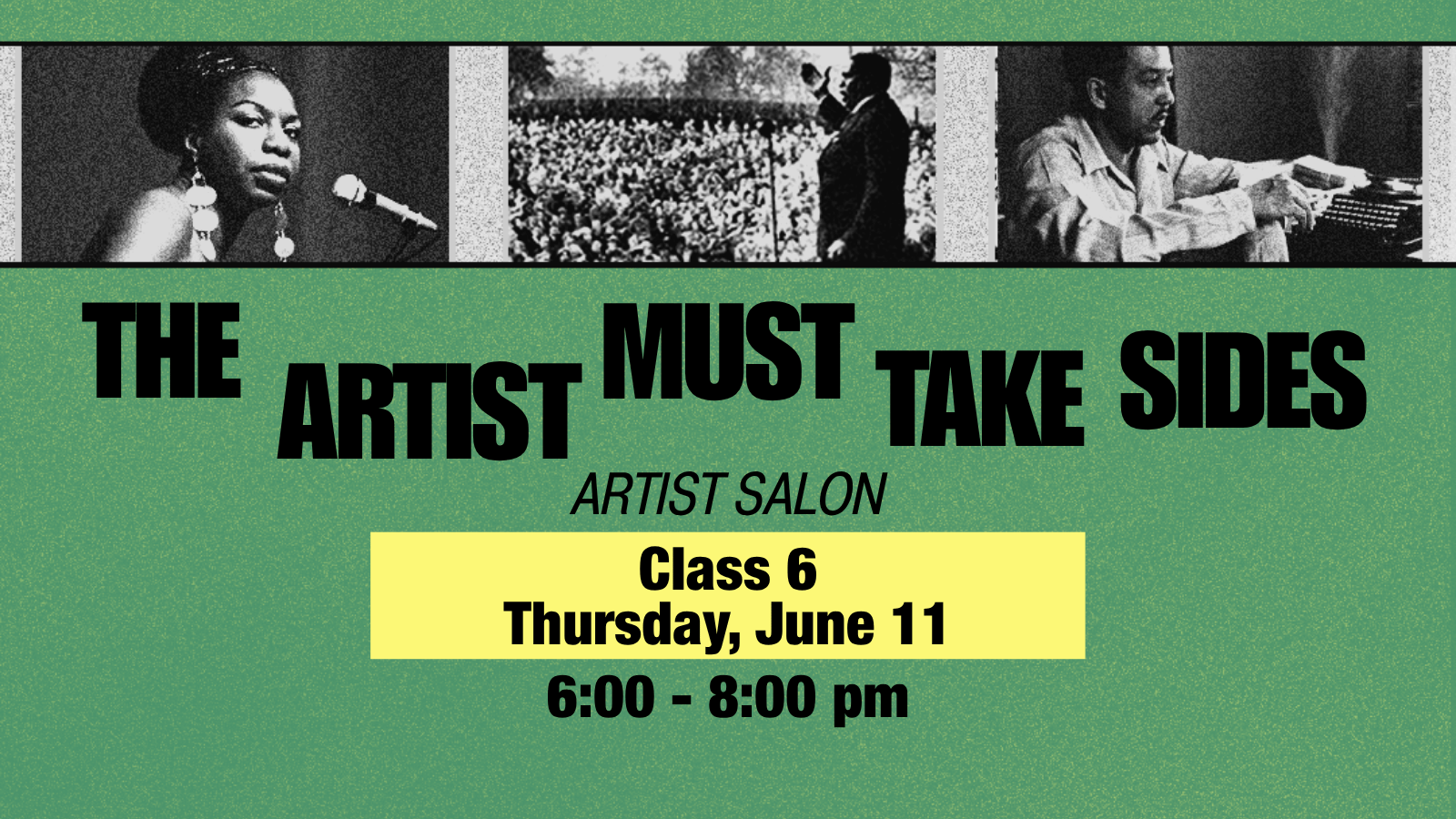
The artist must take sides. He must elect to fight for freedom or for slavery. I have made my choice. I had no alternative.” — Paul Robeson
* The course consisted of a one-time registration fee of $25 – $50, but for those coming for the first time, or who only attended one or two prior sessions, we only ask for a donation of $5 – $10.
Over the past five weeks, the Fonseca-DuBois Gallery at the Indianapolis Liberation Center has hosted The People’s Forum‘s latest educational series “The Artist must take sides.” The artist has the power to illustrate visions of the future that give people hope and push working class movements forward.
Now that we’ve studied the role of artists in various movements, the responsibility of artists to take sides to help build a culture that inspires, drives, and sustains our collective desire for liberation, we’ll review our main takeaways, discuss some additional examples and/or concepts, and, in whatever way you feel is most appropriate, put our study into action.
About the course
In times of war and crisis, when people are rising up, when people are taking a stand, when the stakes could not be higher– what is the responsibility of the artist?
History points us to the answer. Culture is the heartbeat of our movements. It brings people into collective action, sharpens our sense of our own power, and makes a better future feel possible. But the ruling elites also use culture to flood our screens with art that makes the current crisis feel natural, inevitable, and permanent. Artists on the side of freedom have to fight back. Nina Simone, Langston Hughes, June Jordan, Elizabeth Catlett, and Paul Robeson all took a side. The muralists of the Chicano Movement took a side. Hip-hop artists and those speaking out on stages, screens, studio walls, and the streets today take a side. Now, we as artists have to consider what that looks like in today’s context.
Art alone cannot make a revolution, but it can transform the people who will.